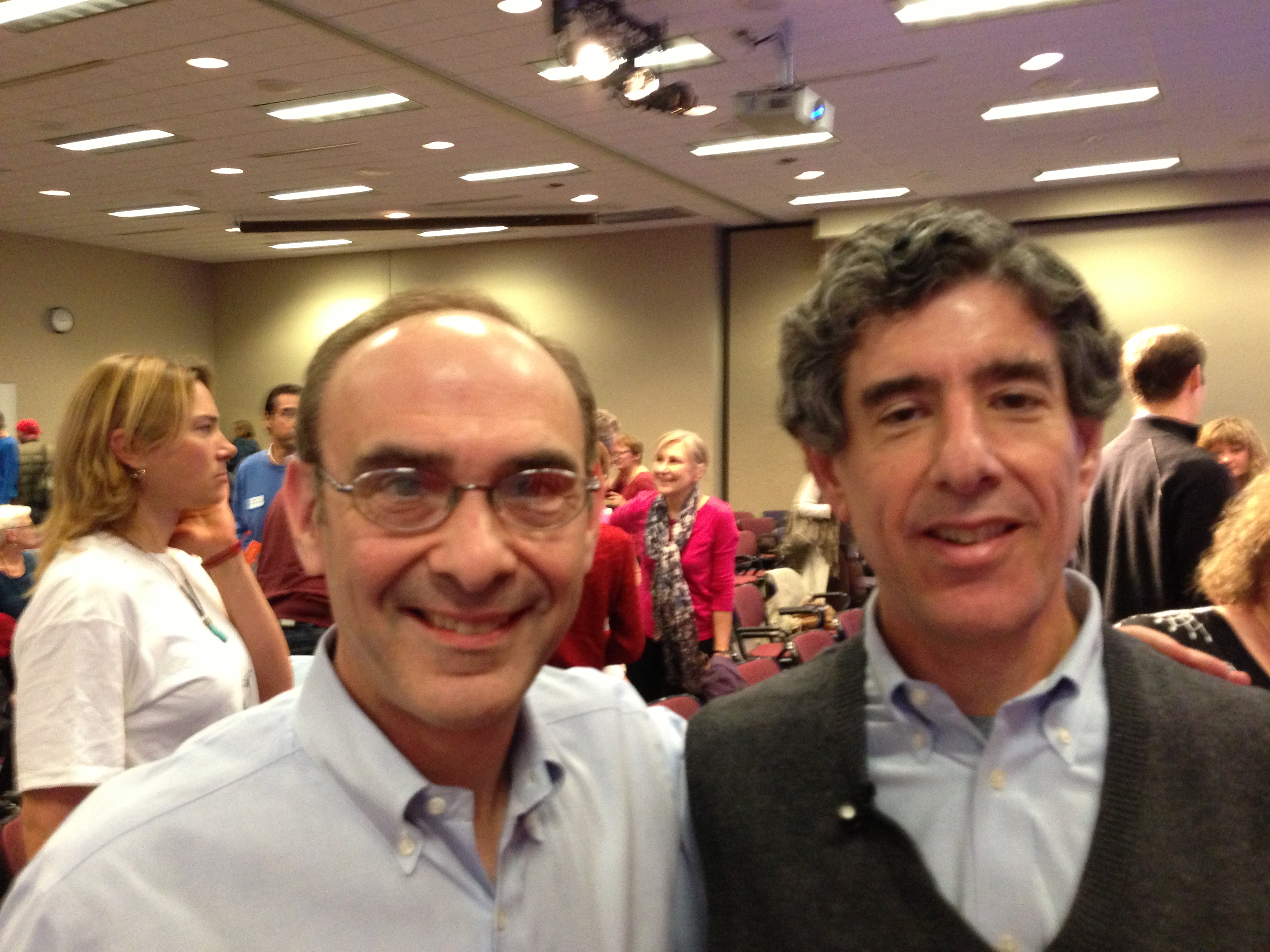
Steven Snyder and Richard Davidson
Last weekend, the Tergar Meditation Community held a workshop on the Science of Meditation, featuring the renowned researcher Richard (Richie) Davidson and Buddhist monk/author/photographer, Matthieu Ricard. The workshop offered a portal into the emerging scientific research on meditation and other contemplative practices.
The field is still in a nascent stage but two things are already clear: (1) the brain has far more plasticity than once thought; and (2) this plasticity can be cultivated through intentional practice. Even more remarkable, the new brain qualities are ones that promote compassion, empathy, and overall well-being. In other words, we can become more kind, less anxious, and happier simply by investing the time and energy to make us so.
While I have had a meditation practice for several years, my practice has deepened considerably since taking the MBSR (Mindfulness Based Stress Reduction) class at the University of Minnesota’s Center for Spirituality and Healing in January of this year. This eight week course taught me the basics of mindfulness and motivated me to deepen my practice over subsequent months. According to the research it is likely that changes in my brain chemistry took place through regular meditation as well as the practice of yoga. As explained by Richie Davidson in his book The Emotional Life of Your Brain, these practices cultivate enhanced connections in the left prefrontal cortex (a center for positive emotionality), and decreased the prominence of the amygdala (a center for anxiety and fear). In addition, they promoted more healthy immune system functioning.
I liken it to installing a new operating system in the brain. Like the operating systems we are accustomed to from Microsoft and Apple, this one comes with many new features and benefits. When you get all anxious and discombobulated, it can calm you down. When you suffer a set back, it can give you resilience to get you through tough times. It can lead to healthier and more fulfilling personal relationships.
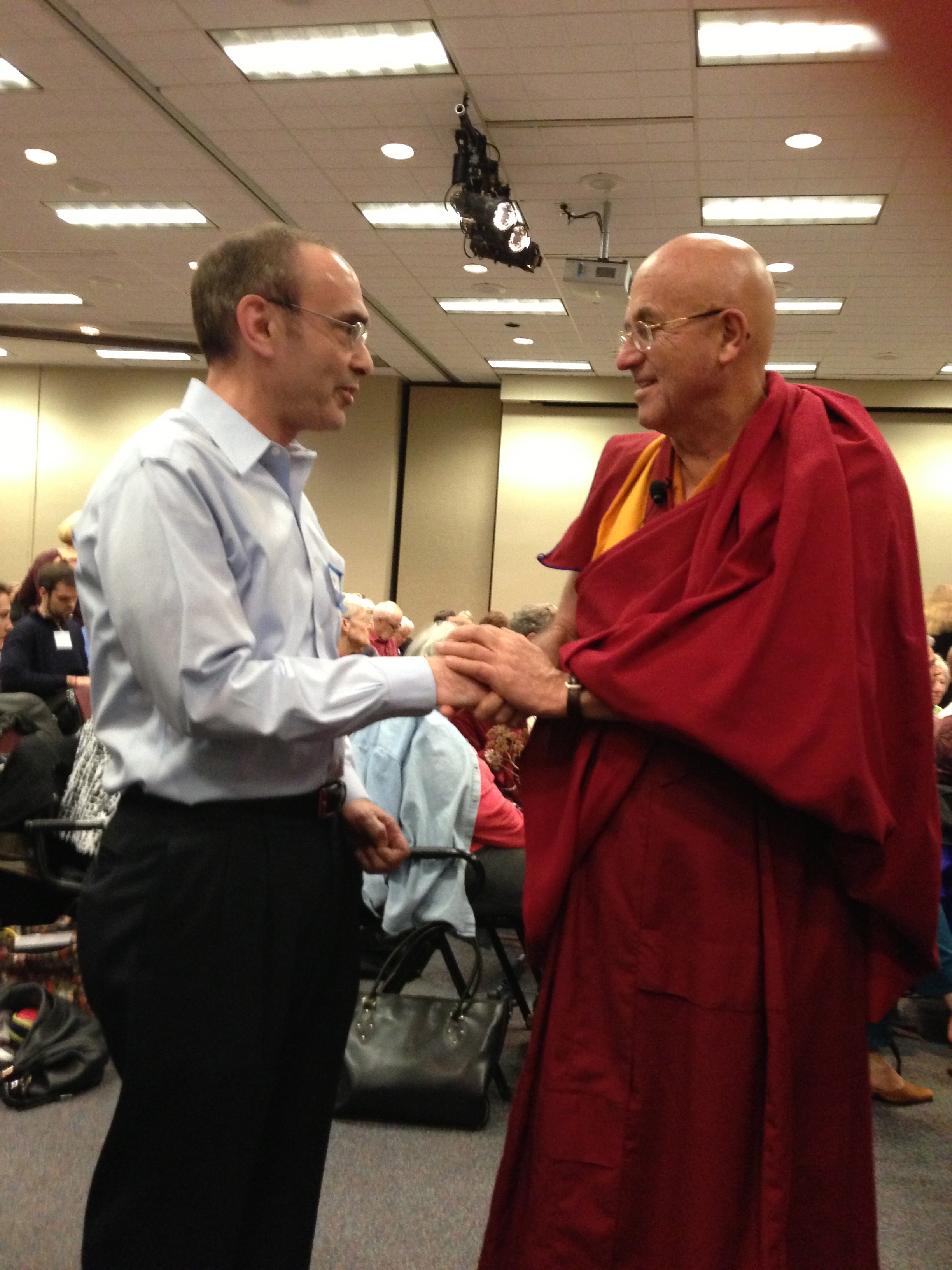
Steven Snyder and Mattieu Ricard
But, unlike an operating system that comes from a manufacturer, this software is “home grown”and personally tailored to your needs and aspirations. Also, you can’t download all at once. Instead, dysfunctional parts of your brain’s old operating system become de-activated over time, replaced with new more functional elements.
How can you get this new operating system? A first step is to take the MBSR class, which is offered in many cities around the country. The curriculum was first developed by Jon Kabat-Zinn, who has written many books on the subject, the most well-known is Full Catastrophe Living. This course will help you understand the principles of mindfulness, and introduce you to the many possible ways for you to practice. It will help you notice things that you may not have previously paid attention to, and will open your eyes to a new way of living. For me, there was also value in being connected with a community of fellow learners. This community gave additional support and encouragement, as well as a forum to share experiences. If you can’t take the class, there are many meditations available for free download.
At the Science of Meditation workshop, Richie Davidson introduced us to emerging research with pre-school age children. The early results are encouraging. These kids are cultivating important skills that will help them better cope with life’s ups and downs. If these kids can do it, so can you!


I wish I had your talent and ability to research and write. I can only aspire to write articles like this. You have my attention with this content. Thank you.